• In 1921, a couple years after the October Revolution, Russia experienced a famine.

    From Astrakhan to Kazan, the combination of a severe drought, a harsh winter, bad harvests and the fallout from the First World War, the Revolutions and the ongoing Civil War, as well as the shortcomings of fixed price grain requisitioning and inefficient rail systems, led to millions perishing.

    Soviet Russia’s economic policy at the time was War Communsim, a centralized management of the newly nationalized economy where total state control was the economic norm. Until 1921, Soviet Russia had banned private enterprise, leaving the Party as the sole economic agent in the turbulent economy.

    The famine challenged this status quo. By 1922, the Politburo and especially Lenin – as well as Bukharin, the editor of Pravda – embarked on a change in course, and introduced the NEP – the New Economic Policy. It has been suggested that Lenin was opposed to the Policy, moving forward with it only to prevent any more deaths.

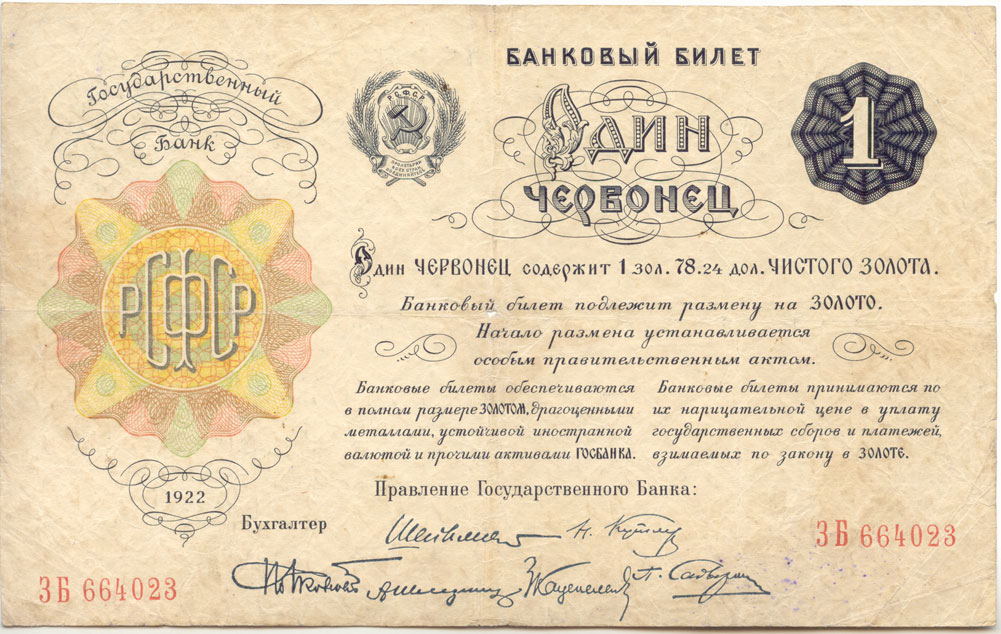
    The NEP brought an upheaval to the otherwise Marxist financial situation. Russia found herself back under a stable and gold-backed currency, the chervonet (example pictured below), while the state allowed for a mixed economy with the prospect of foreign investment.
    On Agriculture, the state allowed for private landholdings and abolished the grain requisition, opting instead for a barter tax on agricultural products, thus allowing for trade and storage of what was left.

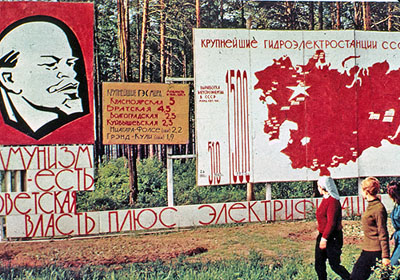
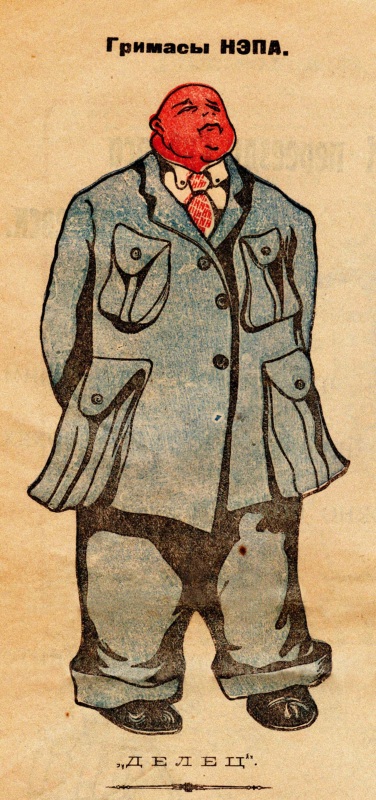
    On Entrepreneurship, the State permitted the existence of private urban firms, soon giving rise to private traders known as the “NEPmen”. These entrepreneurs delved in handicraft sales in the countryside, while on cities some even amassed small fortunes. This drew the ire of the Party, as the existence of wealthy businesspeople on the private sector was a crude violation of the communist ethos. Until the abolition of private commerce in 1931, the NEPmen were targeted by Party propaganda (like the following), and until the collapse of the Union in 1991 represented Russia’s last capitalists.
    This liberalization of the market, in practice a violation of communist theory, was defended by Lenin & Bukharin as a prerequisite to remedy the malaise of Russian society/economy and to lead to the full adoption of communism, a form of terminal capitalism in its last stage before evolution.

    The argument was based on Marx, who argued that only after a nation had fully experienced capitalism and its maturation could it then transition into socialism. Trotsky viewed the NEP as a temporary and regrettable compromise, and in his “Towards Socialism or Capitalism?”, warned against the long-term implementation of it. Given his Menshevik background and until his assasination, he viewed the NEP as one step before the full return of the capitalist system, instead advocating for relentless industrialization and an interventionist foreign policy.

    Stalin never went onboard with the NEP. While he was not outright skeptical as Trotsky nor outright in favor as Bukharin, in his eyes the NEP was still a deviation from communism. After having successfuly risen to the top and purged his enemies, in 1928 he insituted the “Great Break” and formally ended the NEP, bringing in its place the Five Year Plan, giving the Union a solid backbone for state control and nationalization.

    Bukharin on the other hand initially advocated for War Communism, yet after the Famine he became the NEP’s strongest supporter. After Lenin’s death in 1924, Bukharin joined the Politburo and aligned with Stalin, providing the blueprint for his dogma of “Socialism in One Country”, meaning that the transition from socialism to communism should first occur in Russia and thus force the state to neglect foreign revolutionaries to a degree, in the name of pragmatism. Via the Politburo and his alliance with Stalin, he protected the NEP and viciously attacked Trotsky and the radicals in the Party. In 1928, due to the Grain Shortage, he formed the “Right Opposition” as a grouping of conservative Leninists against Stalin’s plan for collectivization. This provided the pretext for his subsequent fall from power, and after he assisted in the drafting of the 1936 Soviet Constitution, he fell victim to the Purges of the Stalinist regime, being executed in 1938.
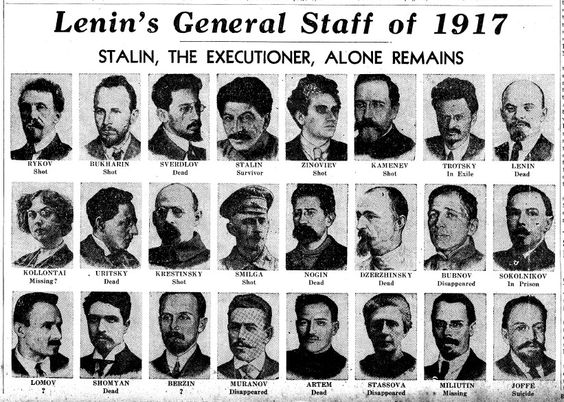
    All in all, the NEP later served as a scourge in the Soviet Union, and as a form of inspiration for the Chinese transition from Maoism to the present day. Gorbachev also looked to it for inspiration, yet the time was not enough to save the Union he had sworn to defend from herself.

  • On an useeming July a couple of decades ago, a number of Asian economies entered freefall. It was on July 2nd that the Thai bhat, fueled by hot money and propping up Thailand’s bubble economy, unexpectedly (or rather dramatically) crashed.

    Thailand had by then acquired a massive foreign debt and relied on speculative capital flows from intranational trade to sustain its economic growth. These anticipated interest and exchange rate differences allowed Thailand (and its neighbours like Malaysia and Indonesia) to receive short-term profits at the expense of overall market stability, thus generating its economic bubble and dragging other countries alongside her.

    On May of 1997, the Thai bhat was hit successively by speculative attacks. On June 30th the government decided not devalue it. That said, it soon became clear that Thailand lacked the foreign reserves to support the USD–Baht currency peg, eventually forcing the currency to float on the beginning of July, allowing the value of the Baht to be set by the currency market. This caused a chain reaction of events not just within Thailand but throughout the region.

    The Thai economy came to a crushing halt within a matter of days. Massive layoffs in finance, real estate, and construction resulted in huge numbers of workers returning to their villages in the countryside and hundreds of thousands of foreign workers being sent back to their home countries. The baht devalued swiftly and lost more than half of its value, reaching its lowest point of 56 units to the U.S. dollar in January 1998. The Thai stock market dropped 75%. Finance One, the largest Thai finance company until then, collapsed.

    By August the IMF unveiled an initial rescue package for Thailand with more than $17 billion to which it later added $2.9 billion more, subject to conditions such as passing laws relating to bankruptcy (reorganizing and restructuring) procedures and establishing strong regulation frameworks for banks and other financial institutions. By 2001, Thailand’s economy had recovered, allowing the government to repay its debts to the IMF in 2003, four years ahead of schedule.

    Outside Thailand, Hong Kong also suffered. The crisis occurred after the transition from British to Chinese rule, making living conditions especially uncertain. Hong Kong “rejoined” the mainland on July 1st, days before the collapse in Thailand. Yet, the crisis didn’t reach it until October. Then, the Hong Kong dollar came under speculative pressure because Hong Kong’s inflation rate had been significantly higher than the United States’ for years. Monetary authorities spent more than $1 billion to defend the local currency. Since Hong Kong had more than $80 billion in foreign reserves, the Monetary Authority (HKMA, effectively the region’s central bank) managed to maintain the peg. Stock markets became more and more volatile so the HKMA raised overnight interest rates from 8% to 23%, and at one point to 280%. It had recognized that speculators were taking advantage of the city’s unique currency-board system, in which overnight rates (HIBOR) automatically increase in proportion to large net sales of the local currency. The rate hike, however, increased downward pressure on the stock market, allowing speculators to profit by short selling shares.

    The HKMA and Donald Tsang, the then Financial Secretary, declared war on speculators. The Government ended up buying approximately HK$120 billion (US$15 billion) worth of shares in various companies, and became the largest shareholder of some of those companies (e.g., the government owned 10% of HSBC) at the end of August, when hostilities ended with the closing of the August Hang Seng Index futures contract. In 1999, the Government started selling those shares by launching the Tracker Fund of Hong Kong, making a profit of about HK$30 billion (US$4 billion).

    Nowhere though did the crisis hit harder than Indonesia. Unlike Thailand, by June of 1997 Indonesia had low inflation, a trade surplus of more than $900 million, huge foreign exchange reserves of more than $20 billion, and a good banking sector. However, a large number of Indonesian corporations had been borrowing in U.S. dollars. This practice had worked well for these corporations during the preceding years, as the national currenct had strengthened respective to the dollar; their effective levels of debt and financing costs had decreased as the local currency’s value rose.

    When Thailand floated the baht, Indonesia’s monetary authorities widened the currency trading band from 8% to 12%. As a result, the currency suddenly came under severe attack. The IMF came forward with a rescue package of $23 billion, but the sinking went further amid fears over corporate debts, massive selling, and strong demand for dollars. The Jakarta Stock Exchange touched a historic low in September. By December of 1998 Indonesia had lost 13.5% of its GDP.

    President Suharto tried to contain the situation by sacking the governor of the Central Bank, without any improvements. The country was in general pretty volatile at the time. There were allegations of fraud in the 1997 legislative election, the 1998 Trisakti shootings and overall discontent of the populace with Suharto’s rule and his policies towards Chinese-Indonesians. The crisis therefore gave a spark to the bomb that exploded in May of 1998, where the entire country underwent violent riots, leading to the deaths of thousands, a turbulent transition period and the collapse of the Suharto regime.

    Lastly, although the crisis impacted the whole region, there was one country far away which also found itself amidst the chaos; South Korea. The banking sector there was burdened with non-performing loans as its large corporations were funding aggressive expansions. During that time, there was a haste to build great conglomerates to compete on the world stage. Many businesses ultimately failed to ensure returns and profitability, while the conglomerates simply absorbed more and more capital investment. Eventually, excess debt led to major failures and takeovers. The Hanbo scandal exposed economic weaknesses and corruption problems to the international financial community. Later that year, in July, South Korea’s third-largest car maker, Kia Motors, asked for emergency loans. The domino effect of collapsing large South Korean companies drove interest rates up and international investors away. In 1998, Hyundai Motor Company took over Kia Motors. Samsung Motors’ $5 billion venture was dissolved due to the crisis, and eventually Daewoo Motors was sold to the American company General Motors (GM).

    The International Monetary Fund (IMF) provided a controversial US$58.4 billion as a bailout package. In return, restructuring measures were required. The ceiling on foreign investment in Korean companies was raised from 26 percent to 100 percent. In addition, the Korean government started financial sector reform. Under the program, 787 insolvent financial institutions were closed or merged by June of 2003. The number of financial institutions in which foreign investors invested increased rapidly. In spite of massive popular discontent, when faced with the reality of the situation, the government went ahead with the deal. The currency, meanwhile, weakened to more than 1,700 per U.S. dollar from around 800, but later managed to recover. However, like the conglomerates, South Korea’s government did not make it out unscathed, having its national debt-to-GDP ratio more than double (approximately 13% to 30%) as a result of the crisis.

    Malaysia and the Philippines were also affected, but sadly explaining the crisis throughout the region would require multiple articles and with sources, not a paltry opinion essay grossly summarising key points. Feel free to research as vividly as you so wish. More importantly, keep cool and focus on the facts, not so on sentiments.

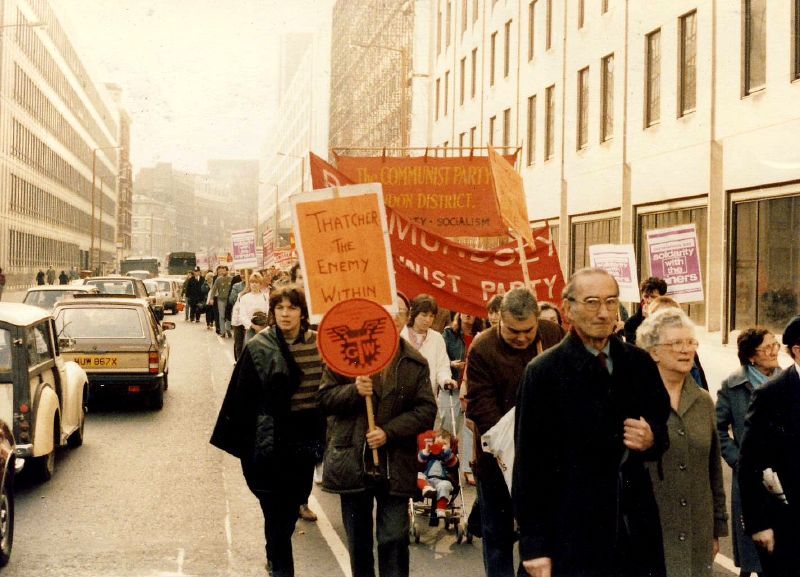
  • One of the more controversial aspects of Baroness Thatcher’s tenure as Britain’s PM was the massive miner’s strike. Starting in Yorkshire, it spread like wildfire throughout the country, until collapsing nearly a year later under legal challenges, internal union discord and pressure from the government. The strike resulted in the effective collapse of the British coal industry, the implementation of the Ridley Plan, the decline of trade unions and their power, as well as stabilising Thatcher’s position as the leader and powerbroker of the nation, being an important factor in her reelection in 1987.

    So, four decades later, what lessons can be drawn from the strike and its results? Quite a lot is the answer, from a micro- and a macroeconomic perspective.

    First of all, the strike was itself the expected yet delayed result of Attlee’s nationalisation of the entire coal industry back in 1947. After the Second World War and the electoral victory of Labour, Attlee finished what Churchill had initiated as a wartime measure. In 1942, the British government nationalised the country’s coal reserves, leaving the actual industry within the private sector. Due to Britain’s post-war economic malaise and his own electoral promises (he later nationalised the Electricity, Railway, Gas and Iron industries), Attlee decided to complete the nationalisation, compensating the owners with government stock and establishing the “National Coal Board”.

    As progressive and hopeful as it may have sounded then, the nationalisation did not stop the coal industry’s decline. If anything it allowed for the disintegration to occur gradually and thus eventually implode on the scale that it did four decades later. What made the decline even worse was that in reality, it was not even the government that wholly controlled the industry, but the unions.

    The NUM (National Union of Coalminers) came to be around the same time as the nationalisation, and quickly established a powerful influence. Following the drop in demand for coal after the 1950s, the NUM’s influence was catalytic in bringing about strikes of the ’60s and ’70s, culminating in the 1972 National Strike and the collapse of the Heath government. Here lied one of the biggest issues of the NUM; on paper it represented the miners, yet in reality it was often a proxy against the Tories and any attempt to face the reality of the situation in earnest.

    After the collapse of the Heath cabinet, in 1977 MP Nicholas Ridley authored the Ridley Plan, which proposed to the next Tory government how to defeat any future nationwide strike. The report was ignored by the press and the NUM, yet not by Ms. Thatcher, who happened to be influenced by Ridley’s proposals.

    Fast forward in the ’80s, the coal industry had reached an impasse; the costs were too high to keep going as usual. Thatcher, ever the fiscal hawk, decided that enough was enough and that it was high time for the industry to face the facts and be privatised. After imposing an accelerated contraction in 1979 and increased mechanisation, an overcapacity of production occured, many miners became redundant and the remaining coal became too expensive and difficult to reach.

    Having already witnessed the privatisation of the Steel industry a year earlier in spite of a 14 week strike and the reduction by half of the workforce there, the NUM and the miners realised that the days of the status quo were numbered. After a motion not to have a national ballot over the issue, the NUM commenced the strike in Yorkshire, and it quickly spread from there to Derbyshire, Kent, South Wales and throughout the land. Soon thereafter, the government announced the closure of 20 coilleries and fully commenced the privatisation.

    The strike was countered by the implementation of the Ridley Plan on Thatcher’s part and by the uneasy position of the National Coal Board itself. After picketing, demonstrations and some participation by elements of the National Association of Colliery Overmen, Deputies and Shotfirers (itself not fully participating due to it not managing to gather enough support among its members), the Courts ruled that the strike was illegitimate and illegal, due to the absence of a national ballot and other reasons, so the strike was formally concluded on March 3rd, 1985, and by 1994 the entire coal industry was henceforth on the private sector.

    In assessing the strike one has to take into account all parameters of the situation. After the 1972 National Strike, the already strained condition of the coal industry entered freefall, so there had to occur an end anyway. In many respects, the strike was the Last Stand not just of the beneficiaries of nationalisation, but also of the miners themselves who saw the writing on the wall. Yet, the sad truth is that there was no other possible conclusion. Attlee’s nationalisation directly led to this path, as the absence of competition and the pressures of the markets allowed for the industry to stagnate. Even worse, that stagnation was emboldened by the fact that the costs were incurred and accrued not by an individual or body with limited resources, but by a government, with its ample access to credit, taxable income, loans and grants.

    Political pressure also played a role. Attlee won the 1945 general election on a platform of people power, riding a wave of enthusiasm coupled with uncertainty over the future. The subsequent governments, Labour or Tory, had to deal with a multitude of intense and transnational issues like decolonisation and the IRA, so upsetting a sizeable part of the electorate over coal, as Edward Heath later found out, could have dire repercussions. The reason why Thatcher succeeded where others feared or failed was because of her famous willpower. Drawing from Ridley’s contigency planning, she did not give in at all to the unions’ demands and instead focused entirely on terminating the parasitism of coal, whichever the cost, which amounted to gigantic unemployment in the former industrial regions, as well as reliance on foreign imports.

    In retrospect, what else could have happened? Well, given the eventual death of the British coal industry in 2016, it’s somewhat debatable yet probably safe to say that, nothing, nothing else could have happened. Attlee’s decision was backed by popular vote, yes, but political volition does not always translate to pragmatic goals. As happened with Britain’s other industries, nationalisation brought nothing but pain and suffering not just to the ones employed in them but also to their customers and (if counting exports) the whole world. As most often, a good intention – the safeguarding of the working class and the industries in which they worked – resulted in a catastrophy. Had Attlee or anybody else chosen to avoid nationalisation and instead leave the industries to their fate, or at least offered subsidies and grants without assuming full control, the crash would have occurred anyway, probably sooner and perhaps more violently, yet with the passage of time the markets and government would have found a replacement for the newly made gap (perhaps nuclear energy?) without resorting to moments of sadness like Orgreave.

    The environmental issue also played a part. In the push for a healthier environment and amidst the technological breakthroughs in petrol, solar, wind and other forms of energy, coal became sidelined. This redundancy was a major factor in the strikes before 1984 and in fact had resulted in the closures of some pits, yet not on the scale and without the long-term focus that happened later.

    All in all, the strike was the exasperated final push of a decayed and moribound industry against the crushing weight of a reality that was long overdue. Were the unions, the government, anybody, in the right or wrong? Probably no, no one at all. Everybody tried to survive and contain the situation, the miners by resisting the government in order to prorect their livelihoods and the government by combatting them in order to safeguard the fiscal security of the nation. It was all bound to end anyway. Should it have reached proportions like in Orgreave, with overworked constables on horseback countering the picketing of weary workers who had everything to lose? Only time and historians may tell. For the rest of us the lesson is simpler, as per Martin Gore;

    “Put it all down and start again
    From the top to the bottom and then (that’s all)
    I’ll have faith, or I prefer
    To think that things couldn’t turn out worse”

  • The American School of Economics is the brainchild of Alexander Hamilton, the 1st Secretary of the Treasury of the United States of America. It was, in one way or another, the dominant economic doctrine of the country – with brief lapses – until the Crash of 1929. After President Hoover’s failure at reelection in 1932 and the rise of the FDR era, the American School was set aside. Recently however it has been revived during President Trump’s second term. While tariffs got most attention, another somewhat forgotten aspect of the School was an idea known as “Harmony of Interests“.

    Hamilton’s “American School” came as a reaction to Adam Smith’s “British School”, nowadays known mostly as Classical Liberal economics. Hamilton argued against free trade and instead proposed economic nationalism, whereby government is a tool used prudently to advance the interests of the nation. While not an originally Hamiltonian idea, it was within this context of economic nationalism that Henry Charles Carey later added his input of a Harmony of Interests.

    Carey, later the economic advisor of President Lincoln and essentially the economic guru of the Union during the Civil War, was originally a proponent of free trade, yet with the passage of time and especially after the Panic of 1837 and the Tariff of 1842 he changed his mind and in 1851 wrote “The Harmony of Interests: Agricultural, Manufacturing, and Commercial“. In it, he rejected class struggle in favor of class cooperation and advocated for governamental support in education through a public school system, investments, subsidies and grants.

    Carey drew on Hamilton’s disdain for Smith’s theories and classical economics in general for being unrelenting and pointless;

    Protection seeks to enable the planter to save this labour and accumulate capital. It is said to be “a war upon labour and capital” but it would here certainly seem to be, what its name denotes, protection to the producer of food and wool against a system which compels him to give the use of fifteen dollars of capital in exchange for the use of one. Its object is that of promoting concentration. That of the system falsely called free-trade is to promote dispersion. The last twelve months have witnessed the expulsion of many thousands of men, and many millions of capital to California, not one-tenth of which will ever return. Hundreds of ships are now in the Pacific, doing nothing and earning nothing, when they might be carrying cotton, and we are now building other ships to replace them. The capital now invested in those ships and in California would have built mills for the conversion of half the cotton of the South, and furnaces for the production of as much iron as is produced in Great Britain. For all this waste of capital the farmer and planter pay, for the harmony of interests is so perfect that the losses of the ship-owner and manufacturer are invariably borne, in largest proportion, by them.” (p. 147, Chapter 15th – How Protection affects the Capitalist).

    Carey argued that free trade brought improvements in the short term yet in the long run resulted in nothing but poverty and misery for anyone who accepted it. In other words, it annihilated the harmony of interests that an otherwise protected and guaranteed national economy, serving all stakeholders, would encompass. In Carey’s eyes, protection – meaning a policy of fair trade, not free, including tariffs and partial intervention in suppport of nascent industries – works much better than opening a country’s market to the world and the forces that occupy it;

    The object of the now dominant class in England is that of bringing about free trade with the world. Such a measure adopted by this country would close every furnace and rolling-mill, and every cotton and woollen factory in the country, and would diminish the value of both labour and land, by compelling the producer of food to seek a market in England. Similar measures adopted by the Zollverein, would compel the people of Germany to do the same, attended with similar results. The market of England would be borne down with the weight, and the price would fall so low as utterly to destroy the power of the labourer on land to pay rent for its use, and the power of the owner to improve it. The class intermediate between the producers in various parts of the world, would daily grow in numbers and strength, and the productiveness of labour and land would daily diminish, with steady diminution in the value of both.” (p. 132, Chapter 11th, How Protection affects the Landowner).

    Carey also warned against the depreciation of labor into a commodity, ultimately resulting in a depreciation of the value of humankind in general and thus leading the masses to reject the free market over socialism;

    “In Europe, on the contrary, population is held to be superabundant. Marriage is regarded as a luxury, not to be indulged in, lest it should result in increase of numbers. ” Every one”, it is said, ” has a right to live”, but this being granted, it is added that “no one has a right to bring creatures
    into life to be supported by other people.” Poor laws are denounced – as tending to promote increase of population—as a machine for supporting thosewho do not work ” out of the earnings of those who do.” No man, it is thought, has “a right” to claim to have a seat at the great table provided by the Creator for all mankind, or that ” if he is willing to work he must be fed.” Labour is held to be a mere “commodity,” and if the labourer cannot sell it, he has no ” right” but to starve—himself, his wife, and his children. ” The particular tendency to error apparent in the prevalent social philosophy of the day”, to which it is deemed necessary to direct specialattention, is ” the unsound, exaggerated, and somewhat maudlin tenderness with which it is now the fashion to regard paupers and criminals!” Such are the doctrines of the free-trade school of England, in which Political Economy is held to be limited to an examination of the laws which regulate the production of wealth, without reference to either morals or intellect. Under such teaching it is matter of small surprise that pauperism and crime increase at a rate so rapid.

    Throughout Europe, men are held in low esteem. They are consideredto be surplus, and the sooner they can be expelled the better it will be for those who can afford to remain behind. To accomplish this object, Colonization Societies are formed, and Parliament is memorialized by men who desire
    to export their fellow-men by hundreds of thousands annually. Whig and Tory journals unite in urging the necessity for expelling man from the land of Britain. Secretaries of State furnish ingenious calculations as to the amount required for accomplishing the work of expulsion. On all hands, it is agreed that men are too numerous, and that their numbers grow too fast, and yet there is not a country in Europe that can justly complain of overpopulation. Ireland, the type of this free-trade system, has millions of acres of her richest lands as yet untouched, that would alone, if drained, yield food in abundance for the whole population
    .” (p. 128-129, Chapter 11th, How Protection affects the Landowner).

    So long as this state of dependence exists, the condition of each is determined by that of the other. If the idle become more idle, and the dissolute more dissolute, those who still continue to work must steadily give more labour for less labour, and their condition must deteriorate unless they adopt such measures as shall gradually diminish and finally terminate their dependence on such companions. The policy of England has tended to produce communism among nations. She has rendered herself dependent upon other communities for supplies of the articles of prime necessity, food and clothing, obtaining her rice from the wretched Hindoo, her corn from the Russian serf, and her wool from the Australian convict, neglecting her own rich soils that wait but the application of labour to become productive. The necessary consequence of this is a tendency downwards in the condition of her people, and as it is with those of England that those of this country are invited to compete, it may not be amiss to show what is the condition to which they are now reduced by competition with the low-priced labour of Russia and of India.” (p. 154, Chapter 15th, How Protection affects the Labourer).

    It is worth noting that Karl Marx was aware of Carey’s theories. Both men actually were at some point colleagues in the New York Daily Tribune, with Carey being an editorialist on political economy from 1849 to 1857 and Marx being the newspaper’s European correspondent from 1852 to 1862. Nonetheless, in and out of the Tribune, Marx heavily disagreed with Carey’s positions;

    ” […] H. C. Carey (of Philadelphia), the only American economist of importance, is a striking proof that civil society in the United States is as yet by no means mature enough to provide a clear and comprehensible picture of the class struggle. […] He reproaches not only him [Ricardo] but Malthus, Mill, Say, Torrens, Wakefield, McCulloch, Senior, Whately, R. Jones, and others, the leading economists of Europe, with rending society asunder and preparing civil war because they show that the economic bases of the different classes are bound to give rise to a necessary and ever growing antagonism among them. He tried to refute them, not indeed like the fatuous Heinzen by connecting the existence of classes with the existence of political privileges and monopolies, but by attempting to show that economic conditions—rent (landed property), profit (capital), and wages (wage labour) instead of being conditions of struggle and antagonism are rather conditions of association and harmony. All he proves, of course, is that he is taking the “undeveloped” conditions of the United States for “normal conditions”. (Letter to Joseph Weydemeyer in New York, London, March 5th, 1852, Marx-Engels Selected Correspondence, Progress Publishing 1975).

    That said, he sometimes did agree with him, albeit partially;

    “…Carey, the American economist, has published a new book, Slavery at Home and Abroad. “Slavery” here includes all forms of servitude, wage slavery, etc. He has sent me his book and has quoted me repeatedly (from the Tribune), sometimes as “a recent English writer”, sometimes as a correspondent of the New-York Tribune” I told you before that in his previously published works this man described the “harmony” of the economic foundations of the bourgeois system and attributed all the mischief to superfluous interference by the state. The state was his bogey. Now he is singing another tune. The root of all evil is the centralising effect of modern industry.

    But this centralising effect is England’s fault, because she has become the workshop of the
    world and forces all other countries back to crude agriculture, divorced from manufacture. For England’s sins the Ricardo-Malthus theory and especially Ricardo’s theory of rent of land
    are in their turn responsible. The necessary consequence alike of Ricardo’s theory and of industrial centralisation would be communism. And so as to escape all this, so as to confront centralisation with localisation and a union of industry and agriculture spread throughout the country, our ultra-free-trader finally recommends protective tariffs. In order to escape the effects of bourgeois industry, for which he makes England responsible, he resorts like a true Yankee to hastening this development in America itself by artificial means. His opposition to England, moreover, throws him into Sismondian praise of petty bourgeois ways in Switzerland, Germany, China, etc. This is the same fellow who used to sneer at France for her likeness to China. The only thing of positive interest in the book is the comparison between the former English Negro slavery in Jamaica, etc., and the Negro slavery of the United States. He shows that the main body of Negroes in Jamaica, etc., always consisted of newly imported barbarians, as under English treatment the Negroes were not only unable to maintain their population but even two-thirds of the number annually imported perished; the present generation of Negroes in America, on the other hand, is a native product, more or less Yankeefied, English-speaking, etc., and therefore fit for emancipation.

    The Tribune is of course hard at it trumpeting Carey’s book. Both indeed have this in common, that under the guise of Sismondian-philanthropic-socialist anti-industrialism they represent the
    protectionist bourgeoisie, i. e., the industrial bourgeoisie of America. This also explains the secret why the Tribune in spite of all its “isms” and socialist humbug, can be the “leading journal”
    in the United States.
    ” (Letter to Friedrich Engels in Manchester, London, June 14th, 1854, Marx-Engels Selected Correspondence, Progress Publishing 1975).

    With all eyes as of writing on the fiscal policy of President Trump’s second administration, the Harmony of Interests perhaps can also make a comeback, much like tariffs did.

    Yet, who knows…

    “The Harmony of Interests: Agricultural, Manufacturing, and Commercial” link:

    “Marx-Engels Selected Correspondence” link:

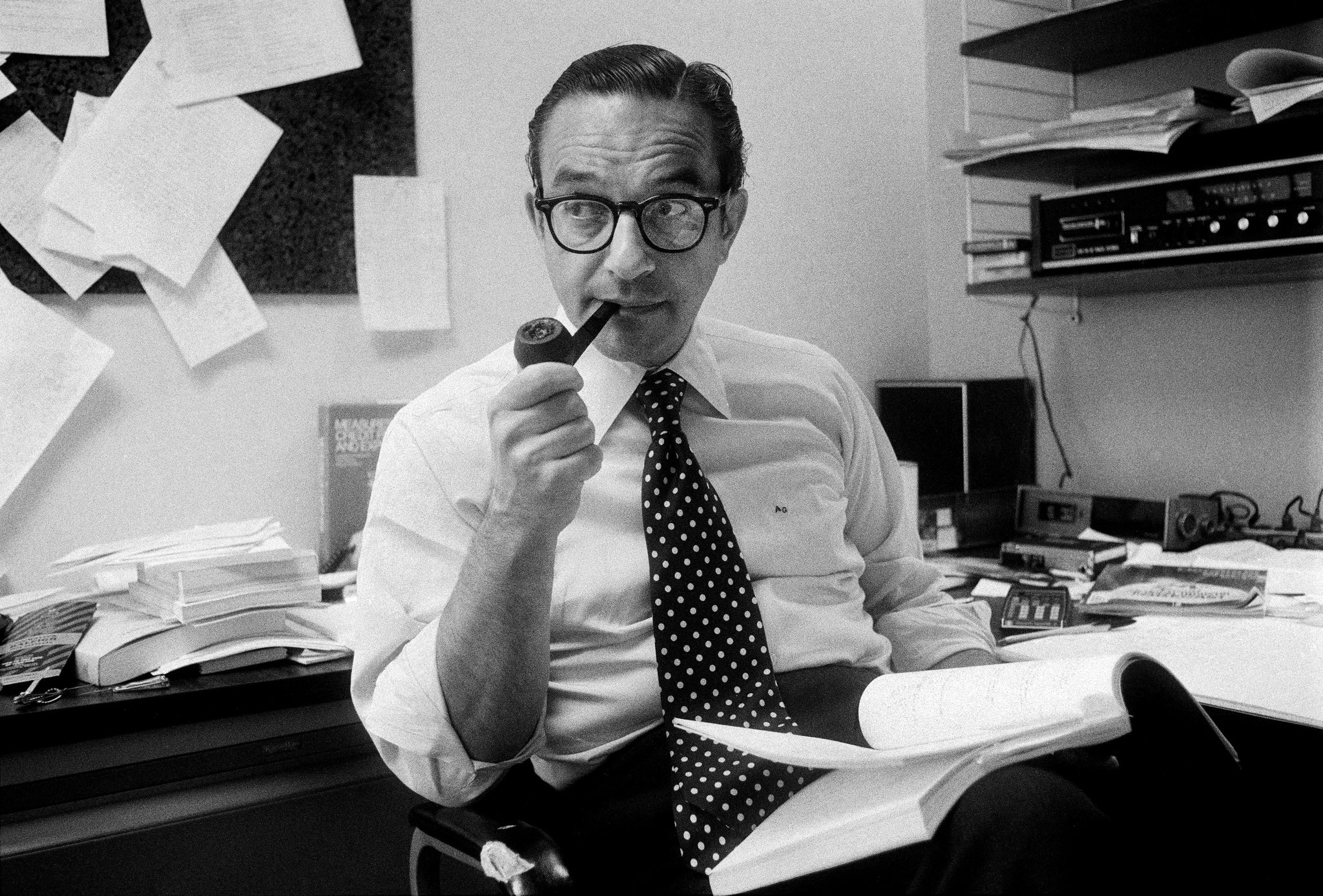
  • Back in 1961, a then young Alan Greenspan, undertook a monumental project; he decided to approach the formation of monopolies.

    In such a task he drew heavily from Rand’s Objectivist school of thought, as well as from historical sources, and came to the conclusion that monopolies do not form as a result of market competition, but rather as an offspring of acute government intervention.

    The point of inspiration for his essay was the Sherman Antitrust Act of 1890, where in stunning congressional unanimity (only 1 Senator dared vote against it and there was no dissent in the House), the American Congress allowed for the governamental break-up of monopolies and outlined rules of conduct within the free market.

    Greenspan viewed the Act in a very negative light. In “Antitrust” he blames the shortsightedness of the public and of the government itself in attempting to ensure order in an otherwise naturally occuring ordered financial environment;

    That Act was not necessitated by the “evils” of the free market. Like subsequent legislation controlling business, the Act was an attempt to remedy the economic distortions which prior government interventions had created, but which were blamed on the free market. […] They [observers] concluded that competition was no longer working effectively. In the sense in which they understood competition, it had never worked or existed, except possibly in some isolated agricultural markets. But in a meaningful sense of the word, competition did, and does, exist — in the nineteenth century as well as today.

    The meaning of competition is paramount. Greenspan separates two kinds of competition; active competition, which encompasses all of economic activity and the necessity of undertaking economic action and actually occurs in daily life, and passive competition, that is robotical in essence and consists merely of purchasing and then selling the desired good, oftentimes being more fictitious than pragmatic. In his eyes, the Act succeeded becaused it was based on the assumption of existence of only passive competition;

    The error of the nineteenth-century observers was that they restricted a wide abstraction — competition — to a narrow set of particulars, to the “passive” competition projected by their own interpretation of classical economics. As a result, they concluded that the alleged “failure” of this fictitious “passive competition” negated the entire theoretical structure of classical economics, including the demonstration of the fact that laissez-faire is the most efficient and productive of all possible economic systems. They concluded that a free market, by its nature, leads to its own destruction — and they came to the grotesque contradiction of attempting to preserve the freedom of the market by government controls, i.e., to preserve the benefits of laissez-faire by abrogating it.

    Greenspan explains that per his interpretation, the rationale of the Act was in fact the very reason for which it came to fruition; intervention and regulation:

    Between 1863 and 1867, close to one hundred million acres of public lands were granted to the railroads. Since these grants were made to individual roads, no competing railroads could vie for traffic in the same area in the West. Meanwhile, the alternative forms of competition (wagons, riverboats, etc.) could not afford to challenge the railroads in the West. Thus, with the aid of the federal government, a segment of the railroad industry was able to “break free” from the competitive bounds which had prevailed in the East. As might be expected, the subsidies attracted the kind of promoters who always exist on the fringe of the business community and who are constantly seeking an “easy deal.” Many of the new western railroads were shabbily built: they were not constructed to carry traffic, but to acquire land grants. The western railroads were true monopolies in the textbook sense of the word. They could, and did, behave with an aura of arbitrary power. But that power was not derived from a free market. It stemmed from governmental subsidies and governmental restrictions.”

    He later mentions an instance of a monopoly (ALCO) where the dominance and reach of the corporation was in fact justifiable and sustainable, without harming its customers and even advancing the field in which it operated;

    The history of the Aluminum Company of America prior to World War II illustrates the process. Envisaging its self-interest and long-term profitability in terms of a growing market, ALCOA kept the price of primary aluminum at a level compatible with the maximum expansion of its market. At such a price level, however, profits were forthcoming only by means of tremendous efforts to step up efficiency and productivity. ALCOA was a monopoly — the only producer of primary aluminum — but it was not a coercive monopoly, i.e., it could not set its price and production policies independent of the competitive world. In fact, only because the company stressed cost-cutting and efficiency, rather than raising prices, was it able to maintain its position as sole producer of primary aluminum for so long. Had ALCOA attempted to increase its profits by raising prices, it soon would have found itself competing with new entrants in the primary aluminum business.”

    Greenspan concludes his essay by taking ALCO as an example of an efficient and beneficial operation, while – in line with Objectivist and Classical Liberal thinking – stressing the importance of letting the markets act on their own and free from red tape, bureaucratic overwatch and regulatory statutes. His stance is that in a regime of unhindered economic viability and development, there will naturally occur eventually a separation of the beneficial members of a society and its economy – the contributors – from the exploitative and predatory elements. As such, any interference of government in any capacity in this process only serves the latter personalities and acts out of resentment, elevating them at the expense of the contributors and therefore impairing the commonweal and welfare of society as a whole.

    ALCOA is being condemned for being too successful, too efficient, and too good a competitor. Whatever damage the antitrust laws may have done to our economy, whatever distortions of the structure of the nation’s capital they may have created, these are less disastrous than the fact that the effective purpose, the hidden intent, and the actual practice of the antitrust laws in the United States have led to the condemnation of the productive and efficient members of our society because they are productive and efficient

    The full text can be found here:

    http://www.polyconomics.com/ssu/ssu-980612.htm

  • Hello world!

    I am a Business Major and in this blog I will share my opinions and much more about the fields of Business, Technology and Economics in general.

    Welcome and enjoy the ride!